The Huge Difference Between Ocean Cruises and River Cruises
The word “cruise” gets used a lot, but not all cruises are the same. There’s a fundamental operational and experiential split between ocean cruises and river cruises.
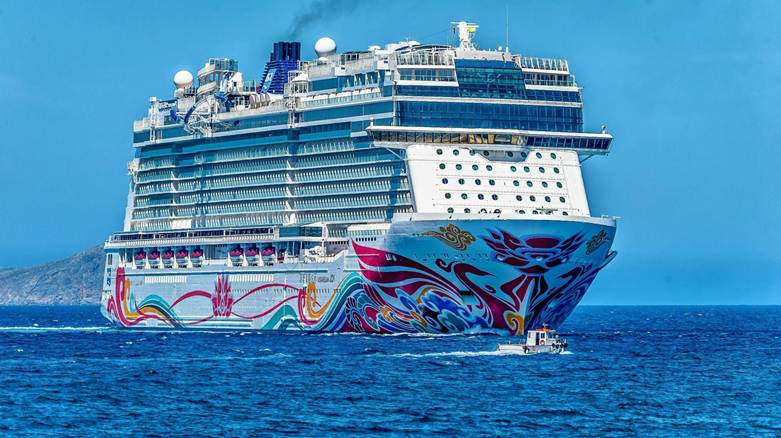
Photo by GEORGE DESIPRIS: https://www.pexels.com/photo/white-cruise-ship-on-the-sea-945177/
One operates in the vastness of open water, charting long distances between ports of call. The other operates in confined waterways, threading its way through cities, valleys, and cultural landmarks.
Near Daufuskie Island in South Carolina, you can get a practical taste of that difference without traveling far. Regular ferry services and short pleasure cruises run from Hilton Head Island to Daufuskie—offering morning, afternoon, and evening trips across Calibogue Sound and back.
These are not long-haul maritime journeys, but they illustrate an important point: when your vessel is close to land and linked to local communities, your travel becomes rooted in place rather than passage.
Understanding the difference between ocean and river cruising helps clarify what kinds of experiences each offers—and why one might make you want to plan another trip while the other may be more about the journey itself.
What Defines an Ocean Cruise
Ocean cruises are defined by scale and distance.
Ocean cruise ships are large—often carrying thousands of passengers. They are engineered for stability in open water, have deep hulls to handle swells, and are built for long stretches at sea between ports.
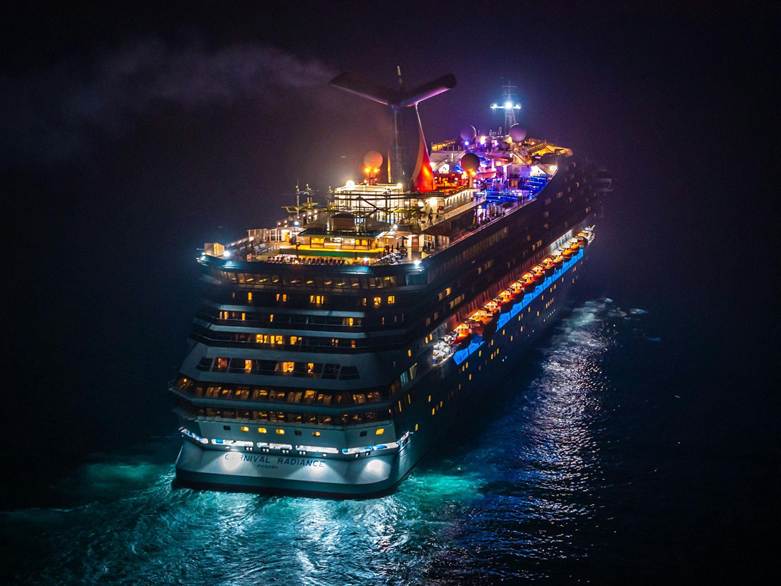
Photo by Jose Parra: https://www.pexels.com/photo/illuminated-cruise-ship-sailing-at-night-34748742/
These vessels are designed to be self-contained destinations, with multiple dining venues, entertainment options, pools, gyms, and sometimes even casinos. Their sheer size and amenity set them apart from other forms of travel.
Cities and islands are visited as destinations. By design, passengers often disembark for pre-booked tours, beach visits, historical sightseeing, or cultural experiences before returning to the ship at night. In regions near Daufuskie Island, for example, small boats serve the island’s ferry needs, but ocean cruise liners that call at South Carolina or Georgia ports are a totally different scale—linking many more destinations and offering a broader range of experience beyond local waters.
Large ocean cruises also mean long sea days, where the ship is at sea for 24 hours or more between calls. For many travelers, these days are part of the appeal: meals, shows, classes, and views over open horizons. For others, they are a reminder of distance—the vessel is a starting point and an end point, and the places in between are encountered as separated events.
Ocean cruising is about movement across wide spaces and the comfort of scale.
River Cruises: Embedded in Landscape and Culture
River cruises function in another dimension entirely.
A river cruise vessel has to be small—usually under 200 passengers—so it can navigate narrow waterways, low bridges, and small locks.
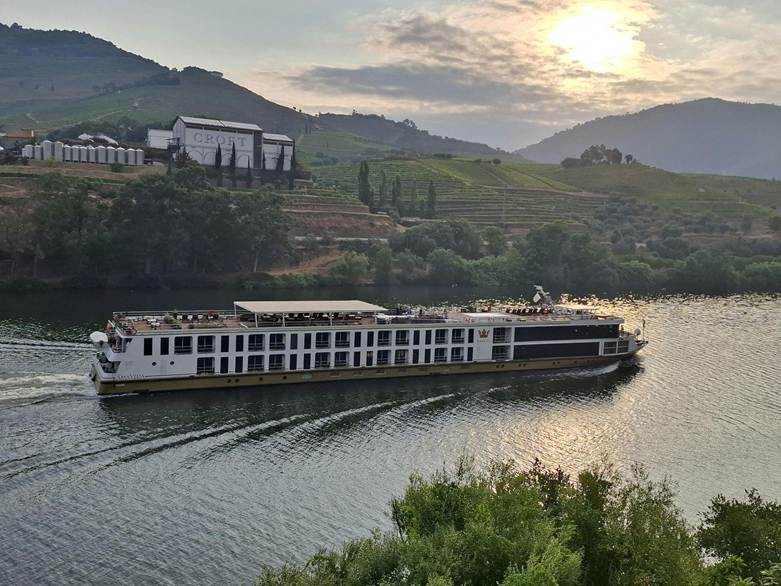
Photo by Filipa Moreira: https://www.pexels.com/photo/scenic-douro-river-cruise-at-sunset-35389339/
Ships on the Rhine, Danube, Seine, or Rhône spend most of their time within sight of land, docking right in the heart of towns and cities rather than in distant ports.
What sets them apart is what’s around them at all times: cities, farms, vineyards, castles, markets. The ship becomes a mobile hotel room rather than a destination unto itself.
Europe: Rivers That Tell a Story
European river cruising is especially compelling because the rivers are not just paths through Europe’s geography—they are paths through Europe’s history.
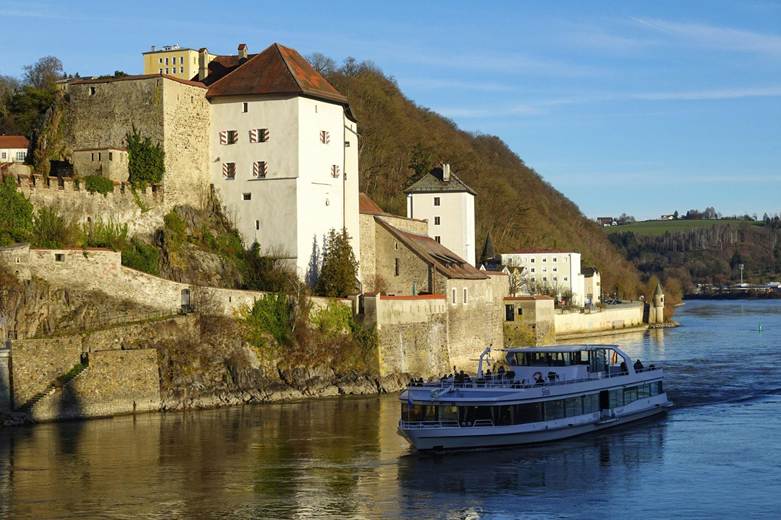
Photo by Magda Ehlers: https://www.pexels.com/photo/ferry-boat-on-danube-river-15271538/
Danube carries you past medieval cities, Baroque towns, and ASLUNESCO heritage sites; the Rhine threads through castle-strewn valleys and industrial hubs; the Seine flows past cathedrals, galleries, and centuries of architectural evolution.
Itineraries typically dock in or near town centers, which means you step off the ship directly into the urban fabric rather than a distant port terminal. Because the vessels are small and travel shorter distances overnight, most of the day is spent ashore in a sequence of culturally rich excursions.
This difference changes the experience. An ocean cruise delivers destinations spaced far apart, segmented by structured onboard entertainment. A European river cruise delivers a near-continuous sequence of direct interaction with places, people, and patterns of life.
Asian Rivers: A Different Kind of Immersion
Rivers in Asia offer another lens on cruising. The Yangtze River cruise in China winds through dramatic gorges and large inland cities, blending natural and industrial landscapes in a way ocean cruising cannot.
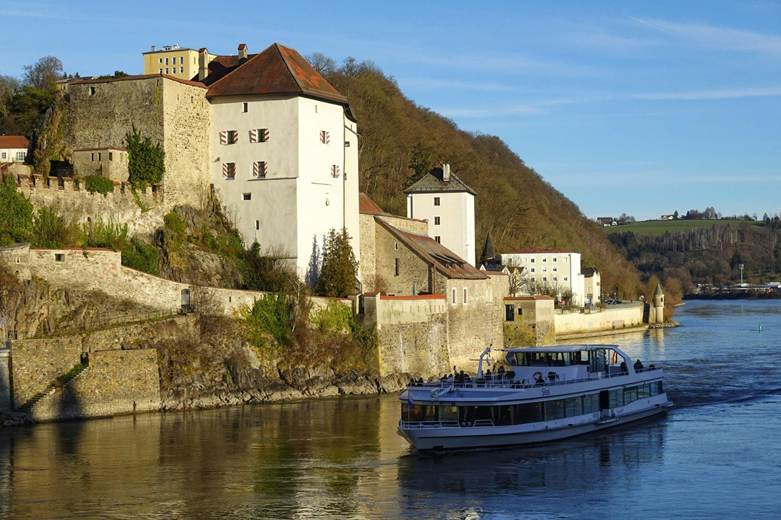
Photo by jason hu: https://www.pexels.com/photo/28101617/
Other Asian river itineraries, like those on the Mekong or Ganges (depending on provider and route), immerse travelers in ways shaped by local culture and community rhythms—boat traffic, riverside life, markets, and seasonal shifts—rather than architectural heritage alone.
These river experiences share a structural logic: port calls are frequent, distances between stops are short, and the narrative of the voyage is directed by the land immediately beside the water.
Practical Differences That Define the Experience
The contrast between river and ocean cruises is not just cultural—it shows up in how the journeys are planned and delivered.
Ship Size and Design
Ocean vessels are engineered to handle rough water, accommodate large populations, and offer diverse onboard programming. River vessels are engineered for navigability, efficient docking, and proximity to land. River cabins tend to be smaller but face scenic windows, often with panoramic views that glass walls maximize.
Itinerary and Rhythm
Ocean cruises often include sea days where the ship is in motion and not stopping. River cruises rarely have this. Instead, the vessel moves steadily from one nearby town to another, and most nights end with no significant distance traveled overnight.
That rhythm makes river cruising feel more like a chain of short explorations and less like long stretches in transit.
Onboard Experience
Ocean ships have often been described as floating cities because they need to serve large populations with diverse interests over long distances. River vessels are more like boutique hotels on water: fewer amenities, but the experience of the surroundings becomes the central focus.
Why People Often Want to Cruise Again
People rarely return from a cruise thinking only about what they saw. More often, they think about how the experience felt. Cruises—both ocean and river—remove a layer of friction that usually comes with travel. You unpack once. Your accommodation moves with you. Meals, transport, and timing are handled. That mental lightness is a big part of why people want to go again.
Another factor is pacing. Cruises operate on a rhythm that’s different from most forms of travel. There is structure, but not pressure. You don’t rush between hotels or worry about missed connections. That rhythm creates a sense of continuity, and continuity is what many travelers miss once they return to everyday life.
River cruises and ocean cruises offer that continuity in different ways. River cruising keeps you close to towns, neighborhoods, and daily life along the banks. You see how places connect to each other geographically and culturally.
Ocean cruising emphasizes the feeling of distance and transition. You leave one place entirely and arrive at another with a clear sense of separation. Both formats create a mental reset that many people don’t get from traditional point-to-point travel.
Near Daufuskie Island, the short ferry crossings already hint at this appeal. You step onto a boat, move across water, and suddenly the pace changes. You arrive somewhere that feels distinct, even if it’s only a few miles away. That shift in perspective—of moving through space rather than racing across it—is what cruising amplifies.
What makes people want to cruise again is not just the destinations. It’s the way movement, rest, and exploration are integrated into a single system. You are not just visiting places; you are traveling through them in a way that feels contained, coherent, and manageable.
That experience is rare. And once people have it, they often look for it again.